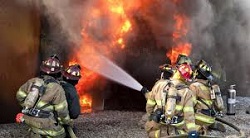
Security, Fire and Loss Prevention and Emergency Management
Do you as a manager fully know what security measures and emergency planning processes you have in place? In a management or supervisory role you need to convince your clients, colleagues and staff you have the expertise and these procedures in place. This program provides the essential abilities with a detailed concentration on managing a controlled exercise. The benefit of this role is critical to managers, supervisors and administrators who may have to pro-actively prepare for and possibly manage the unexpected.
Course objectives:
- To provide expertise to manage the health and safety process
- To complete supervised exercises in health and safety documentation development
- To provide expertise to complete and manage risks assessment
- To provide expertise to investigate and analyze safety statistics
- To monitor safety process and undertake audits
Who should attend?
- Managers and supervisors of security or emergency management
- Managers and supervisors who require to initiate and monitor security and emergency management procedures
- Personnel managing administration of assets or logistics
Course Outline:
Hazards in various industries:
- Lessons From Past Accidents
- History of Fires & Explosions
- Hazards in Process systems – Separation, Liquefaction, etc.,
- Hazards in Compressor Stations & Pipeline Transportation.
- Consequences of Spills & Leaks
- Major Effects from Chemical Accidents
- Types of Fires & Explosions
- Toxic Gas Dispersion
Working in Hazardous Areas – Basic Safety Procedures:
- Workplace hazards & Component Inspections
- Safe Working Practices
- Identification of Flammable & Combustible Material/ Chemical Hazards
- Protocol for Identifying Hazardous Material
- Use of permits and procedures in critical areas
- Devising procedures & checklists to achieve a safe system of working with chemicals/ equipment (detect, avoid or compensate for error-likely procedural steps.)
- Basic first Aid – assessment of breathing, control of shock, burns etc.,
Advanced Safety Systems /Techniques:
- Hazard Identification Process
- Results from Hazard Identification Procedures
- Goal of Hazard Identification
- Necessity for Hazard Identification & Procedure
- Risk Assessment Procedure
- Hazardous Area Classification in Industrial Plants
- Selection of appropriate technique
- Identification of Critical Equipment
- Safety System Performance Considerations
Hazard Prevention & Control Measures:
- Safety Inspection and auditing Incident Reporting Importance of Accident Investigation & Reporting
- Failure Sequences
- Classification of Causes
- Accident Prevention
- Elements of Incident Investigation
- Reporting for Near-Misses & Accidents
Handling Spills/ Leaks of Chemicals:
- Actions Required
- Handling Gas Leaks
- Prevention & Mitigation for Fire & Explosion hazards
- Emergency Responses
Maintenance of Equipment in Hazardous Areas:
- Safety Availability & Reliability
- Protection of Equipment
- Safety of Electrical Equipment
Emergency Response Management:
- Identifying the key components of a Safety Management System (SMS)
- Emergency control
- Team and personnel training
- Resources and organization of the team and support facilities
- Investigation
- Safety Management Systems
- Relevant key elements that make up an integrated HSE Management System - SMS in action
- Planning for efficient emergency response and crisis management
- Establishing a major accident prevention policy
- Incident develop or crisis
- Structuring your organization’s approach to crisis and emergency management
- The warning of the public in an emergency
- Justifying the role of industrial emergency response resources
- Methodology – Risk based scenario reviews
- Alternatives conclusions/findings
- Responding to the emergency
- Activating emergency response plans
- Undertaking crucial decision
- communications and problems encountered to bring the situation to a speedy conclusion
- Contracting out emergency process
- Choosing the right contractor
- Back up resources required
Loss Prevention Policies & Procedures:
- Risk Reduction & Control Program
- Hierarchy of controls
- Inherently safer design strategies: Minimize, Substitute, Moderate, Simplify;
- Industrial examples
- Safety Management Systems
- Safety A New Perspective
- Risk based Safety Culture
- Measuring Safety culture
- System Safety and Role of communication
- Adoption of international standards / Certification
- Good Safety is good business
WORKSHOP STYLE:
This will be a participative workshop with a mix of interactive learning sessions, exercises and discussions aimed to provide maximum impact and learning retention for all delegates.